
Medical repatriation
Medical Repatriation Flights
When a patient needs to come home, our concierge desk arranges the flight with specialist air-ambulance operators — medical crew, equipment and clearances included.
Your flight
Tell us your travel details — no contact details yet.
Popular airports
Adults
Ages 2+
Empty-leg opportunities may also be considered when relevant.
No contact details·Free
Or directly: +33 7 66 61 37 42·WhatsApp
Flyius is a quote request and intermediation platform for private aviation options. No company registration number or registered office is published on this page. Flyius does not own or operate aircraft and is not a direct or indirect air carrier. Flights must be performed by a commercial operator authorized for the route and aircraft; the actual operator is identified in the flight documents.
concierge
Repatriation desk — nights, weekends, holidays
Airport access
Airports worldwide, close to the receiving hospital
Operator sourcing
Vetted operators, incl. specialist air-ambulance carriers
A medical flight is a logistics problem — we handle it end to end
A medical repatriation moves a patient from a hospital abroad back to a hospital, rehabilitation centre or home near their family. It combines an aircraft, a medical crew, ground ambulances at both ends and the paperwork in between — usually at short notice, in a stressful moment.
Flyius is an air charter broker: we arrange the flight through specialist air-ambulance operators (Part 135 / AOC) whose dedicated medical teams equip the aircraft for the patient's condition — stretcher, oxygen, intensive-care equipment or an incubator where required. Whether the patient is fit to fly is always assessed and decided by the operator's medical team, based on the medical reports.
One desk coordinates the whole chain: aircraft and medical configuration, overflight and landing clearances, ground ambulances, and communication with the hospitals and, where involved, your insurer or assistance company.
The desk answers concierge — call with the patient's location and a contact at the treating hospital, and we take it from there.
How we vet every operatorSee how charter worksWhat an air ambulance costs: cited benchmarks
From first call to arrival, step by step
Four steps, one desk — the flight process is logistical; every medical decision stays with the operator's medical team.
01
1. Call the concierge desk
Tell us where the patient is, the destination and a contact at the treating hospital. You get a named coordinator and a quote — typically after availability checks for standard cases.
02
2. Medical file & fit-to-fly
The treating doctors' reports go to the operator's medical team, which confirms the patient is fit to fly and defines the configuration: stretcher, oxygen, medication, escort doctor or nurse.
03
3. Aircraft, crew and clearances
We contract the specialist operator, and the operator prepares the aircraft and files the permits: overflight and landing clearances, airport slots and handling at both ends.
04
4. Bed-to-bed coordination
Ground ambulances are scheduled at departure and arrival, the receiving hospital is briefed, and a family member can usually accompany the patient on board.
Timing depends on the medical file, permits and aircraft availability — your coordinator gives you a realistic schedule before anything is committed.
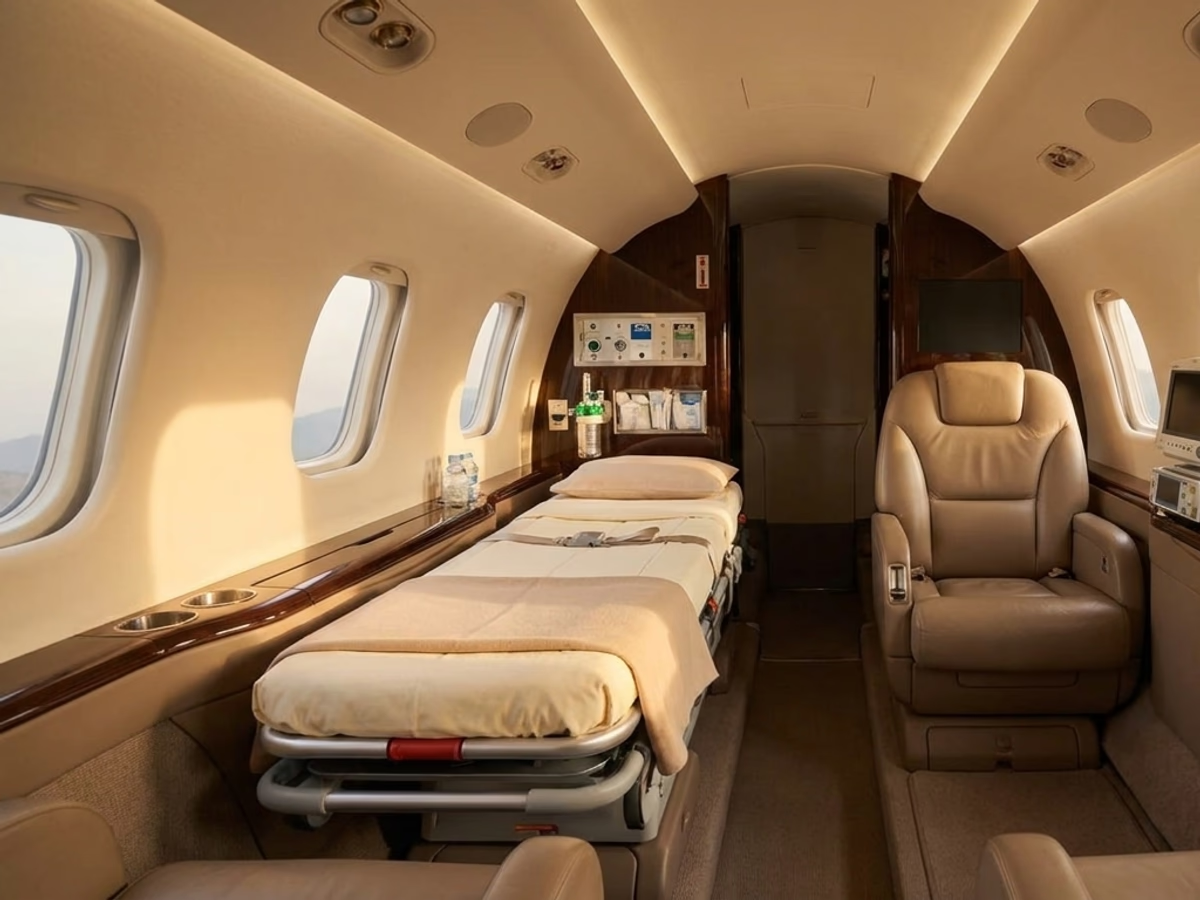
A cabin built around the patient
Dedicated air ambulances fly with an installed stretcher unit, oxygen, ventilation and monitoring, plus seating for an accompanying relative. The configuration is set by the operator’s medical team after the fit-to-fly review — never by the budget.
On lighter cases, a medically escorted seat on a private jet or scheduled flight replaces the full configuration — one of the options compared below.
Air ambulance, medical escort or stretcher — what fits
The right solution depends on the patient's condition, the distance and the budget — the operator's medical team recommends, you decide.
| Option | What's included | Best for | Watch out |
|---|---|---|---|
| Dedicated air ambulance | Medically configured aircraft, dedicated medical crew, direct routing | Intensive care, time-critical or unstable conditions | The most expensive option — sized by distance and medical needs |
| Medically escorted private jet | Charter aircraft with medical escort and portable equipment | Stable patients who cannot travel on airlines | Not equipped for intensive care en route |
| Commercial stretcher (airline) | Stretcher installed in a scheduled aircraft, with escort | Stable long-haul cases on a budget | Limited routes and airlines; several days of lead time |
| Medical escort on a scheduled flight | Doctor or nurse accompanying a seated patient | Mobile patients needing supervision only | Depends on airline approval of the medical file |
Your coordinator prices the options that match the medical file — never pay for an air ambulance where an escorted flight is medically appropriate.
Who pays for a medical repatriation
Three common set-ups — we work with whichever applies.
01
Travel insurance or assistance
Many travel and health policies cover repatriation ordered by their medical team. The assistance company can mandate and pay the operator directly — we coordinate with them.
02
Private / family funded
When there is no cover, or the insurer declines, the family contracts the flight directly. You get a firm written quote before committing — no surprises after the flight.
03
Corporate & employer cases
Employers repatriate posted staff through duty-of-care programmes. We invoice the company and keep HR and the assistance provider in one loop.
04
What the quote includes
Aircraft, medical crew and equipment, clearances and handling, ground ambulances where requested — itemised in writing. Hospital costs remain between you and the hospitals.
We don't assess insurance cover — check with your insurer or assistance company; we coordinate with them from the first call.
Medical repatriation — what families ask
What is a medical repatriation flight?
What is the difference between an air ambulance and a medical escort?
What medical crew and equipment are on board?
How quickly can a repatriation flight depart?
Does travel insurance cover medical repatriation?
Can a family member fly with the patient?
Who actually operates the flight?
How much does a medical repatriation cost?
One call starts everything
Tell the desk where the patient is and where they need to go — a named coordinator handles the rest, with your insurer if involved.
Repatriation desk — concierge, response typically after availability checks