Mexico City private jet aviation hub
ARGUS Certified
Instant Quotes

Private aviation hub

Private jet charter in Mexico City

The complete Mexico City private aviation guide — 6+ routes, top FBO terminals, transparent pricing from €9,000, instant quotes from 15+ certified operators.

Routes

6+

Starting at

€9,000

Primary Airport

Toluca

Sophie Marchant

Written by Sophie Marchant · Senior Business Aviation Editor · 9+ years aviation experience

Reviewed by Thomas Werner · Aviation Operations Reviewer

Last updated

The hub

Mexico City, a private aviation
crossroads of the continent

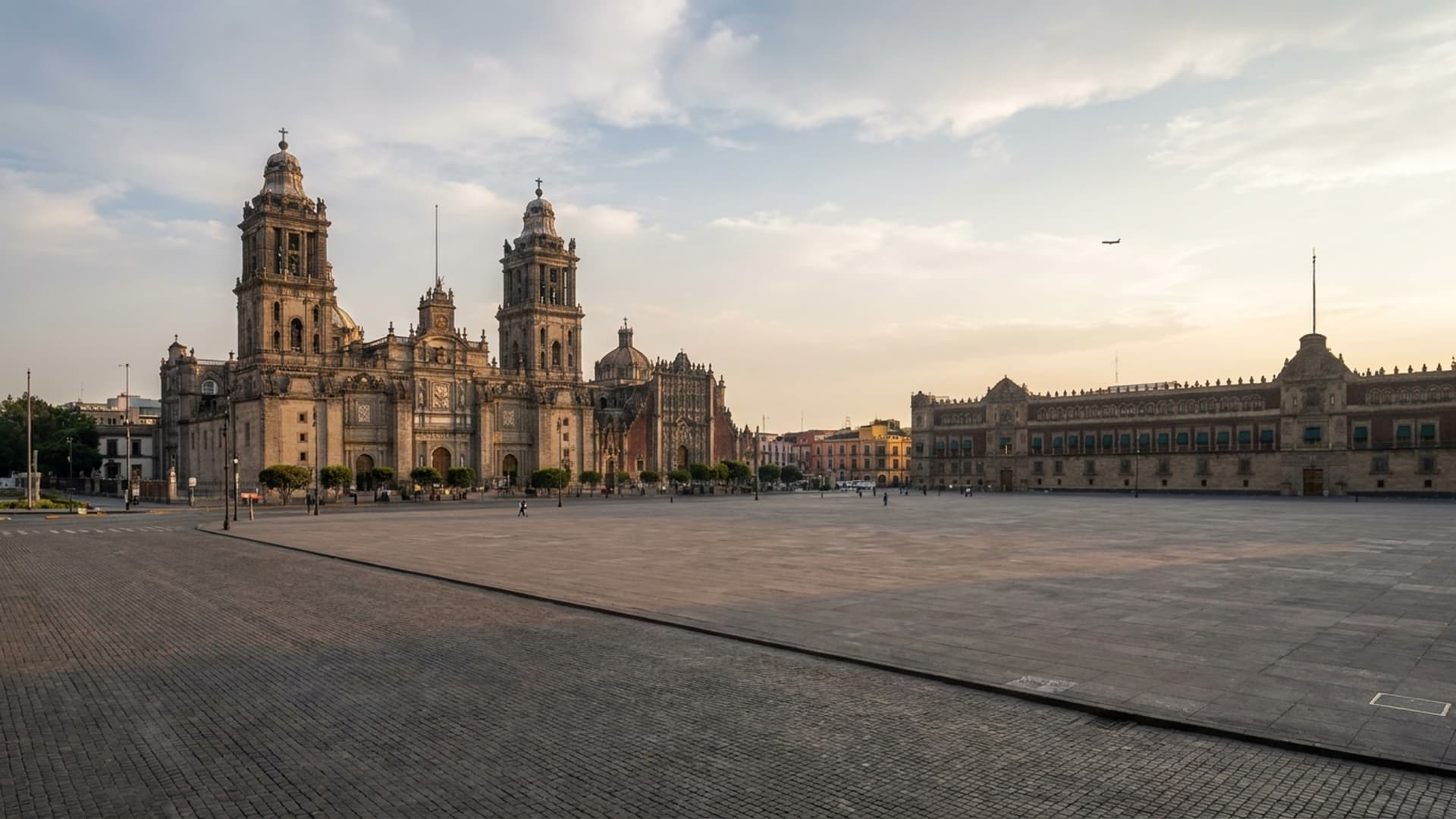
Mexico City is the political, financial, and cultural capital of Mexico and one of the ten largest urban economies in the world. Home to the Mexican Stock Exchange, the headquarters of Grupo Bimbo, América Móvil, FEMSA, and dozens of Fortune 500 regional offices, the city generates substantial executive traffic year-round. The energy, banking, and manufacturing sectors drive continuous private aviation demand, with operators from Houston, Miami, New York, and Madrid maintaining regular positioning cycles into the metropolitan area.

For private aviation, the metropolitan area is served by three distinct airfields. Benito Juárez International (MEX) historically handled charter movements but has been progressively restricted for general aviation following the opening of Felipe Ángeles International (NLU/AIFA) in 2022, located 50km northeast. Toluca International (TLC), operated by GACM and sitting at 2,580 meters above sea level, remains the preferred base for business jets: lower traffic density, faster ground handling, and direct ramp access without the congestion of MEX. High-altitude performance calculations are mandatory for all departures from TLC — operators should factor density altitude into fuel loads and payload limits, particularly in summer months when temperatures compound the elevation penalty.

The F1 Mexican Grand Prix in October and the Day of the Dead celebrations in late October/early November generate the highest concentrations of private jet traffic. During these periods, PPR requirements tighten at TLC and ground transport to the city center (45–75 minutes via the Toluca–México Highway, depending on traffic) should be pre-arranged. Polanco, Santa Fe, and Lomas de Chapultepec are the primary business and residential districts for UHNWI arrivals, all within 30–60 minutes of TLC under normal traffic conditions.
  • Dedicated Jet Airport
  • Latin America Hub
  • High Altitude
Build my charter
Mexico City private jet FBO and destination overview
The inside view

Flying private to Mexico City

Mexico City stands as Latin America's premier private aviation gateway, concentrating executive demand from the continent's largest economy into a metropolitan area that generates more consistent charter activity than any other destination south of the Rio Grande. The city's role as regional headquarters for multinational corporations — financial services, telecommunications, FMCG, and energy — ensures year-round flight activity that peaks predictably around the Mexican Grand Prix in October and flattens only briefly during December holiday weeks.

From an operator perspective, the Mexico City metropolitan area presents a three-airport decision that defines the client experience. Benito Juárez International (MEX/MMMX) remains the primary registered airport and entry point for commercial connections, but general aviation handling has progressively shifted toward the alternative fields. Toluca International (TLC), located approximately 65 km west of the city center at an elevation of 2,580 metres MSL, functions as the operational standard for business jets: lower commercial traffic density, direct apron access, and dedicated general aviation infrastructure make it the preferred choice for time-sensitive executive movements. Felipe Ángeles International (NLU), opened in 2022 some 50 km northeast of the centre, handles larger aircraft and customs processing, but its handler ecosystem remains in development.

The altitude factor at TLC is non-negotiable for operators unfamiliar with high-density-altitude environments. At 2,580 metres MSL, every departure requires formal performance calculations. Summer months compound the elevation penalty: ISA+15°C conditions in July can push effective density altitude above 3,800 metres, materially affecting climb gradient, obstacle clearance, and maximum takeoff weight. The 4,200-metre runway at TLC provides adequate field length for all business jet categories under appropriate weight restrictions, but the performance arithmetic must begin well before the aircraft reaches the runway.

Mexico City's private aviation market is bifurcated between corporate demand and event-driven leisure travel. The corporate segment is sustained by the density of international investment in the city — private equity transactions, real estate development, and bilateral trade missions generate consistent movement between Mexico City and Houston, Miami, New York, and Madrid. The leisure and entertainment segment spikes sharply around the Formula 1 Mexican Grand Prix, which annually generates one of the highest concentrations of UHNWI private jet movements in the Western Hemisphere. Day of the Dead (October 31–November 2) and Mexico City Fashion Week create secondary demand windows. Operators positioning aircraft into TLC during Grand Prix week should secure ramp reservations six to eight weeks in advance; pre-coordinated ground transport to the Autódromo Hermanos Rodríguez is essential.

The primary business districts — Polanco, Santa Fe, Lomas de Chapultepec, and the Paseo de la Reforma corridor — are 45 to 75 minutes from TLC under normal traffic conditions, extending to 90–120 minutes during peak hours or event weeks. Helicopter transfers between TLC and rooftop helipads in Polanco are operationally viable and offer meaningful time compression when schedule pressure is acute. International arrivals should note that Mexico requires advance customs coordination at all general aviation entry points.

For operators positioning into Mexico City from Europe, the most common routing combines a tech stop in Miami or Houston before the final leg into TLC. Ultra-long-range platforms (G700, Falcon 10X, Global 7500) can achieve non-stop transatlantic sectors from major European airports directly into TLC with careful weight planning, but density altitude constraints at departure make payload optimisation critical.

The Flyius network covers the Mexico City metropolitan area with operator options across all three airports, with emphasis on operators maintaining current PPR and performance approvals for TLC high-altitude operations.

Departures

Departures from Mexico City

Departures from Mexico City typically operate out of dedicated business-aviation terminals with FBO services, VIP lounges and customs clearance. The right field for your outbound charter depends on FBO availability, peak-hour slot windows and the runway length your jet category needs. Light Jets suit short regional hops, Midsize Jets cover longer European sectors, Heavy Jets support larger groups, and Ultra Long Range aircraft handle non-stop Mexico City → North America or Asia missions. Confirm 24–48 hours ahead to lock in your preferred FBO; last-minute outbound is possible from 4 hours notice when crew and aircraft are positioned locally.

Arrivals

Arrivals in Mexico City

Inbound flights to Mexico City land at the dedicated private aviation terminal or an adjacent field closer to downtown — your concierge picks the optimal arrival based on customs hours, ground-transfer time and the runway length your jet category needs. Most Mexico City arrivals can be confirmed 24–48 hours ahead; during high-demand weeks (sports finals, fashion weeks, ski breaks, summer peaks) inbound slots fill 5–7 days out. The arrival terminal typically offers VIP lounges, dedicated customs and immigration channels, conference rooms, premium catering and pre-arranged luxury ground transport. Helicopter transfers from the airport to nearby resorts, downtown helipads or onward destinations can be added to any inbound charter.

Airports & FBO

Where private jets meet Mexico City

Every Mexico City-area private aviation field listed, with runway length, customs availability and FBO services so you can pick the optimal terminal for your charter.

MMMX / MEX

Mexico City International Airport

Runway: 3,900 m
Customs24/7 opsFBOPremium handling

FBO services

Manny AviationUniversal AviationAerolineas Ejecutivas
Transparent pricing

Private jet pricing for Mexico City

Indicative ranges — request a fresh quote for your exact date and routing

Outbound

€16,000–€20,000

€24,000–€30,000

€36,000–€45,000

Inbound

€9,000–€27,000

€13,500–€40,000

€21,000–€60,000

Prices are indicative market ranges. Final quote depends on aircraft availability, specific date, routing and fuel surcharges.

Network

Top operators serving Mexico City

These are the certified operators that fly in and out of Mexico City most often through our network. Each is independently audited (ARGUS, Wyvern or IS-BAO) before any aircraft is quoted on Flyius.

N

NetJets Europe

HQ · Portugal

ARGUS PlatinumWyvern WingmanIS-BAO Stage 3

Fleet size

150

Aircraft types

Citation Latitude · Citation Longitude · Challenger 350

V

VistaJet

HQ · Pan-Europe / Malta

ARGUS PlatinumWyvern WingmanIS-BAO Stage 3

Fleet size

70

Aircraft types

Super midsize · large · ultra-long-range jets

J

JetFly

HQ · Luxembourg

ARGUS PlatinumWyvern WingmanIS-BAO Stage 3

Fleet size

8

Aircraft types

PC-12 · PC-24 · Pilatus

A

Air Partner

HQ · United Kingdom

ARGUS Gold

Fleet size

0

Aircraft types

All types - charter broker

A

Air Charter Service

HQ · United Kingdom

Fleet size

L

LunaJets

HQ · Switzerland

Fleet size

Every operator listed holds a valid AOC, current insurance and a third-party safety audit. We refuse to broker flights on unvetted aircraft.

See all certified operators
Empty leg alerts

Discounted private jet alerts from Mexico City

No live empty leg is currently published from Mexico City. Set an alert and our concierge will monitor repositioning flights, nearby airports and flexible departure windows for you.

  • Be notified when a repositioning aircraft matches your preferred route.
  • Check nearby airports automatically when they offer better availability.
  • Compare empty leg opportunities with standard charter quotes before booking.
View empty leg alerts

Empty legs are subject to fixed aircraft positioning, date flexibility and operator confirmation.

Sustainability

Emissions and offset for flights from Mexico City

Indicative CO₂ per category based on the median distance of routes ex-Mexico City, with SAF (Sustainable Aviation Fuel) offset cost at current market rates.

Category · CO₂ (per route) · kg / km · SAF offset cost
Light Jet

5,964 kg

kg / km:2.4SAF offset cost:€23,856
Midsize Jet

7,703.5 kg

kg / km:3.1SAF offset cost:€30,814
Heavy Jet

10,437 kg

kg / km:4.2SAF offset cost:€41,748
Ultra Long Range

13,916 kg

kg / km:5.6SAF offset cost:€55,664

Emissions estimated using EBAA/EUROCONTROL business-aviation factors (light 2.4 kg/km, midsize 3.1, heavy 4.2, ultra 5.6). SAF offset priced at €4/kg CO₂ — current market midpoint.

Indicative ranges
Private jet on tarmac at Mexico City
Safety & operators

Audited operators serving Mexico City

Every charter quoted on Flyius uses a third-party-audited operator

ARGUS Platinum

Top-tier independent safety audit.

Wyvern Wingman

Pilot vetting and operational safety.

IS-BAO Stage 3

IBAC business aviation standard.

Our safety standards
City guide

Travelling to Mexico City

Why people fly private to Mexico City

Highlights

  • Dedicated Jet Airport
  • Latin America Hub
  • High Altitude

Major events

  • F1 Mexico GP
  • Day of the Dead

Nearby destinations

  • cancun
  • acapulco
FAQ

Everything you need about Mexico City

Pricing, airports, booking lead times, customs and ground transport — answered

Which airport do private jets use in Mexico City?
Most private flights use Toluca International (TLC/MMTO), the capital's main business-aviation field, which sits roughly an hour west of the city and offers FBO handling with far shorter waits than the commercial airports. Mexico City International (Benito Juarez, MEX) is heavily slot-constrained, so it is generally avoided for charter unless a specific reason requires it. The newer Felipe Angeles International (NLU) to the north serves as an alternative and can suit larger cabins.
How much does a private jet to or from Mexico City cost?
A light jet on a short regional sector starts from about €5,500 one way, while a midsize aircraft to a US gateway typically runs roughly €13,000–€16,000. A heavy jet on a longer intercontinental leg is usually from about €46,000 depending on aircraft type, routing and repositioning. Note that Toluca and Mexico City sit above 2,000 metres, so high-altitude performance planning can reduce payload or range on some aircraft.
When is private-jet demand from Mexico City highest?
Demand peaks around the Formula 1 Mexico City Grand Prix at the Autodromo Hermanos Rodriguez, held in late October, when hotel and slot pressure pushes many visitors to charter. The Day of the Dead period in early November and the mid-September independence celebrations also lift traffic. Corporate travel stays steady year-round given the city's role as a business hub, with a dip over the summer rainy season.
What are the most common private-jet routes from Mexico City?
The busiest corridors run north to the United States, with Los Angeles and Miami among the most frequently flown links for corporate and leisure passengers. These US routes dominate because of the city's business ties and connections onward to Europe. Domestic legs to coastal resorts and other Mexican business centres are also common.
How do you get from Toluca to central Mexico City?
Toluca lies west of the capital, and a private car transfer to the main business districts such as Polanco or Santa Fe typically takes around 60 to 90 minutes, longer in heavy traffic. FBO handling can arrange chauffeured cars airside so passengers move straight from aircraft to vehicle. If a client is based on the northern side of the metropolis, Felipe Angeles (NLU) may offer a shorter road transfer.
How much does it cost to fly out of Mexico City by private jet?
Outbound prices from Mexico City depend on destination, aircraft size and routing. Current guide prices on visible Flyius routes: Light Jets from €9,000–€27,000, Midsize Jets from €13,500–€40,000, Heavy Jets from €21,000–€60,000. Live availability and fuel surcharges can shift the final quote.
Mexico City private jet aviation hub
Your next flight

Ready to fly private from Mexico City?

Instant quote from 15+ certified operators. No commitment, transparent pricing.