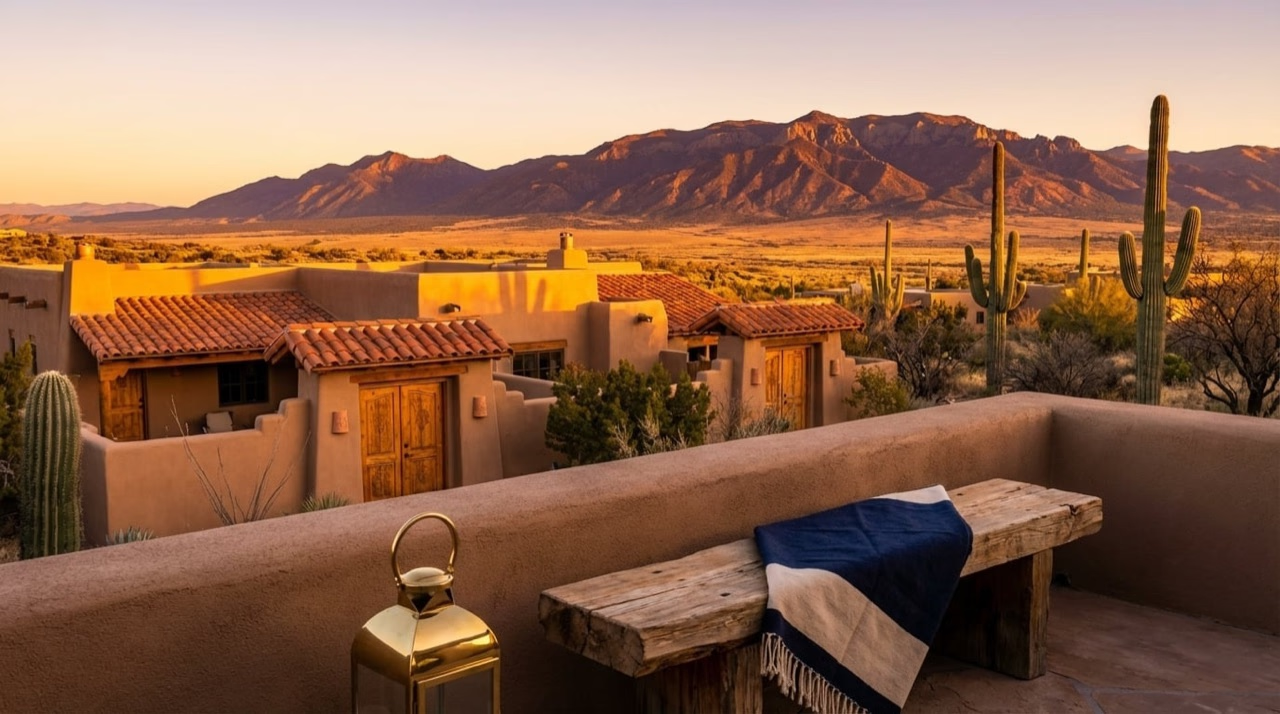
Santa Fe, New Mexico — population approximately 90,000 — operates as a cultural and economic outlier in the American Southwest. Home to the second-largest art market in the United States, the city generates concentrated private aviation demand during defined seasonal windows: the Santa Fe Opera (June through August), Indian Market (third week of August), and the fall gallery season. The discretionary wealth concentrated here, driven by a dense community of collectors, philanthropists, and second-home owners, produces irregular but high-value charter traffic patterns that reward proactive trip planning.
Santa Fe Regional Airport (
KSAF/SAF) is the operational base for this traffic. The airport sits at 6,040 feet MSL with an 8,366-foot primary runway (Runway 02/20), which provides adequate performance margin for most light, midsize, and super-midsize jets under standard summer conditions. Density altitude management is a real planning factor at SAF — summer afternoon temperatures combined with elevation can push effective density altitude above 9,500 feet, requiring payload assessments on longer missions departing westbound. Early morning departures are operationally preferable for heavy-loaded aircraft. The airport maintains 24-hour operations with U.S. Customs and Border Protection services available by prior arrangement for international arrivals.
Ground transfer to central Santa Fe is straightforward — the airport sits roughly 10 miles from the historic Plaza via US-285 South, yielding a 15-to-20-minute transfer under normal conditions. Albuquerque International Sunport (ABQ), 60 miles south via I-25, serves as the alternate for larger aircraft requiring heavier payload capacity or when SAF is weather-affected. The two airports together form an effective arrival strategy for complex itineraries combining Santa Fe cultural events with broader New Mexico or Colorado missions — Aspen (ASE) is reachable in under 90 minutes by air.