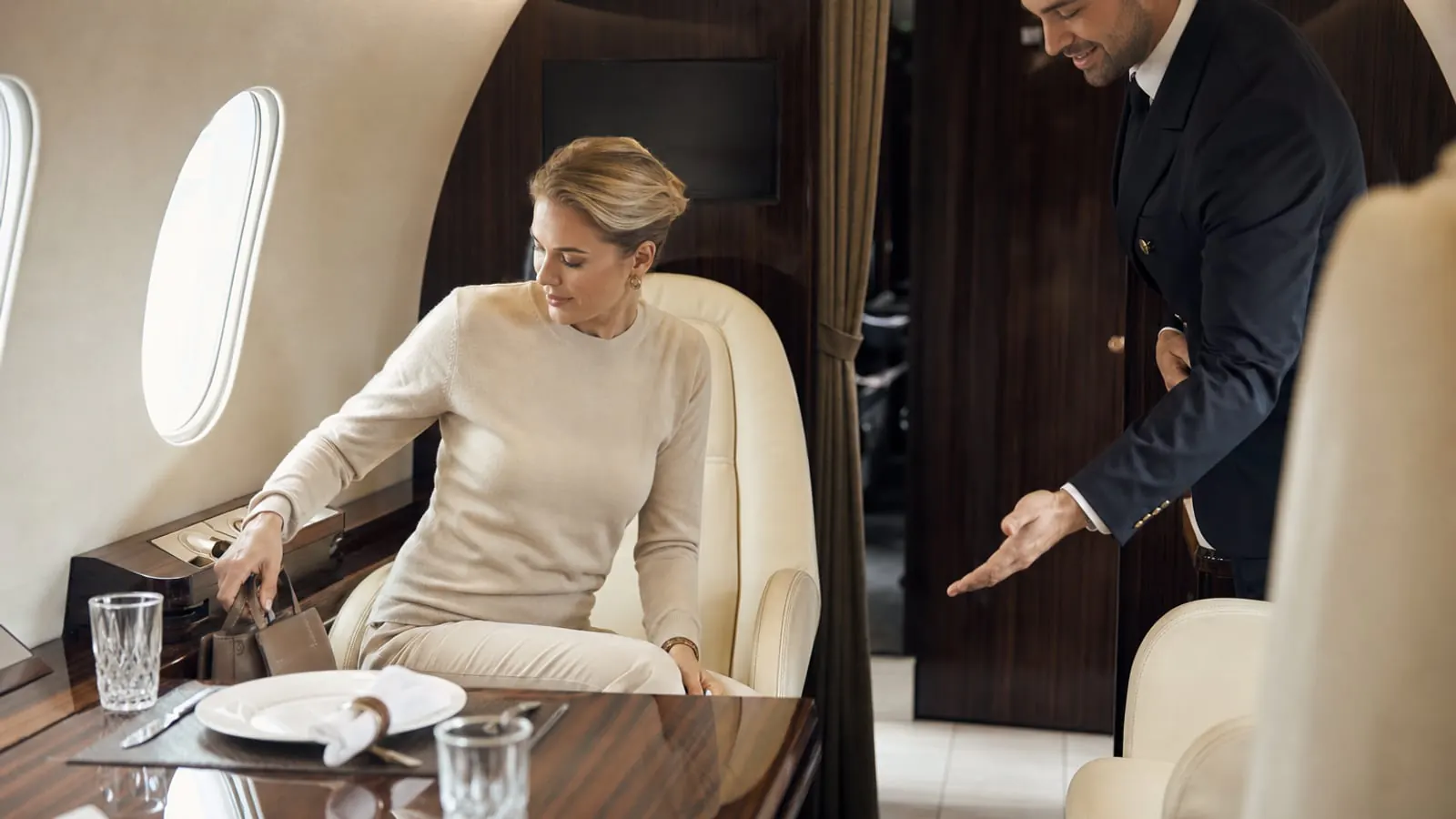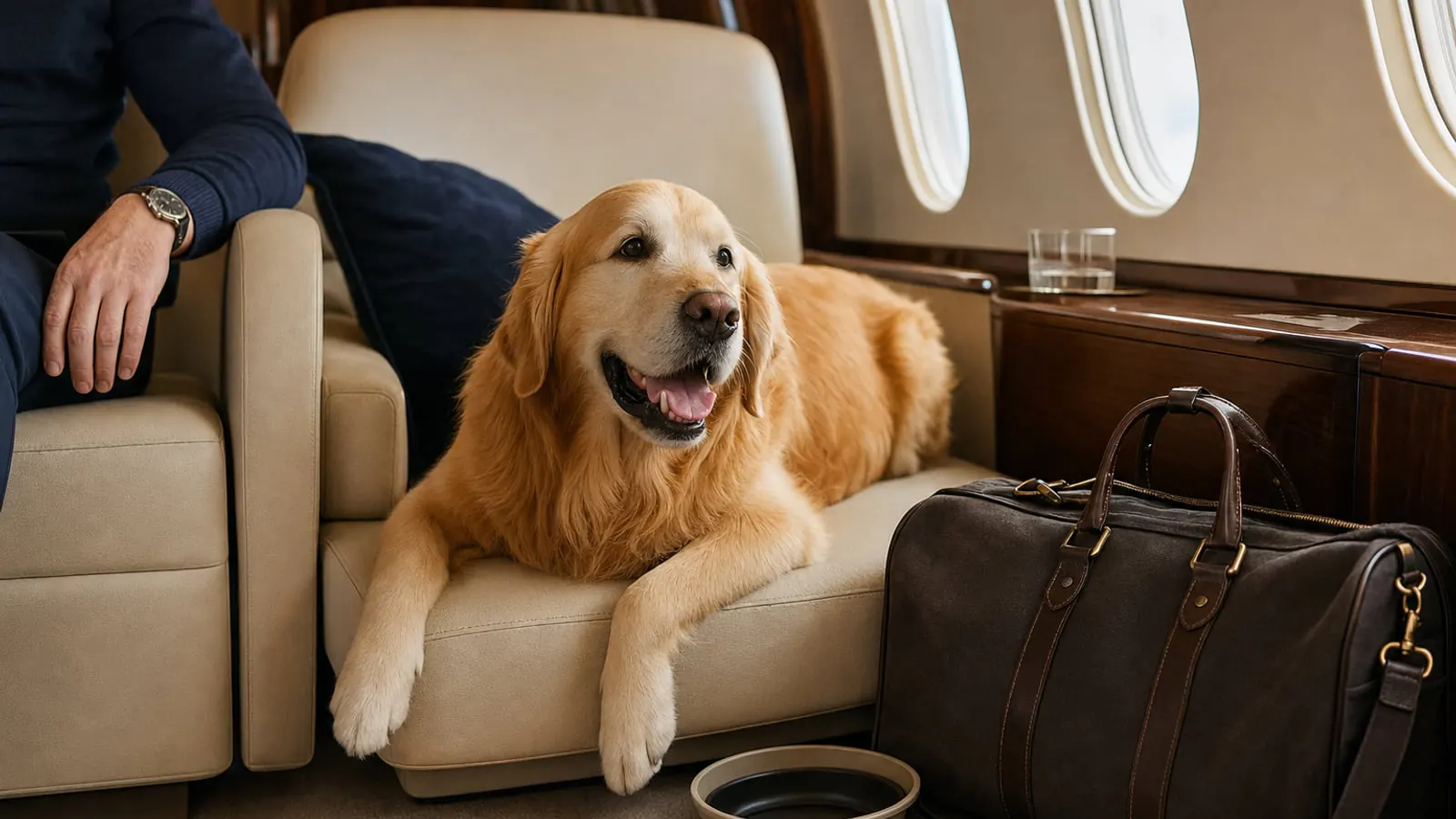
Pets can often travel in the cabin on a private jet, but operator approval does not replace border rules. Here is the 2026 Europe checklist for documents, aircraft choice, costs and UK travel.
A private jet with pets can keep a dog or cat in the cabin with the passengers, subject to operator approval, aircraft safety requirements and the entry rules of every country on the route. The flight experience is usually simpler than scheduled travel; the paperwork is not. A pet that is accepted by the operator can still be refused entry if its microchip, rabies vaccination, travel document, treatment or approved route is incorrect.
Quick answer
| Question | Answer |
|---|---|
| Can pets fly in the cabin? | Often yes on private charter, subject to the operator and safe cabin arrangements |
| Is there a separate pet ticket? | Usually no, but cleaning, cabin-protection or handling fees may apply |
| What is normally required in the EU? | Microchip, valid rabies vaccination and an EU pet passport or animal health certificate, depending on origin |
| Is the UK different? | Yes. Great Britain has approved-route, document and dog tapeworm requirements |
| How early should you prepare? | Start several weeks ahead; longer if the first rabies vaccination, a blood test or non-EU import procedure is required |
| Can more than five pets travel? | Extra animal-health rules can apply unless a qualifying competition/show exception is met |
The three approvals every pet journey needs
1. Operator approval
The operating carrier decides whether the animal can be carried in the cabin and under what conditions. The operator may ask for:
- species, breed, age and weight;
- number of animals;
- passenger count;
- carrier or restraint plan;
- recent veterinary information;
- cabin-protection arrangements;
- cleaning acceptance;
- confirmation that the pet is calm and safe around crew and passengers.
Private charter is more flexible than most scheduled airlines, but it is not accurate to promise “no breed bans or crate rules.” The operator can refuse an animal for cabin safety, aircraft-protection, insurance or operational reasons.
2. Country-entry approval
Border and animal-health rules determine whether the pet may enter. These rules apply regardless of whether the aircraft is private or commercial.
3. Airport and route approval
Some countries require animals to enter through an approved airport or route. This is especially important for Great Britain and for pets arriving into the EU from certain non-EU countries.
EU pet travel rules: the practical checklist
For non-commercial travel with a dog, cat or ferret between EU countries, the standard requirements generally include:
- An identifying microchip. The pet should be microchipped before the rabies vaccination used for travel.
- A valid rabies vaccination. After a first or primary vaccination, the EU normally requires a waiting period of at least 21 days before travel.
- A valid travel document. This is usually an EU pet passport for eligible EU residents travelling within the EU, or an EU animal health certificate for entry from a non-EU country.
- Any destination-specific treatment. Dogs travelling to Finland, Ireland, Malta, Norway or Northern Ireland generally require treatment against Echinococcus multilocularis within the specified window.
- A non-commercial movement. Different rules can apply if the animal is being sold, transferred or transported separately from the owner.
EU passport versus animal health certificate
| Journey | Typical document |
|---|---|
| EU country to another EU country | Valid EU pet passport |
| Eligible listed territory to the EU | Recognised passport may be accepted, subject to current rules |
| Non-EU country to the EU | EU animal health certificate, normally issued shortly before entry |
| Great Britain resident travelling to the EU | Do not assume an EU-issued passport is valid; check current residence and certificate rules |
The document must match the actual owner, residence status, microchip and vaccination history.
Great Britain: stricter route and treatment planning
Great Britain has separate entry rules for dogs, cats and ferrets. The journey may require:
- an approved travel route;
- microchipping before rabies vaccination;
- a valid rabies vaccination and applicable waiting period;
- the correct pet travel document for the country of departure;
- tapeworm treatment for most dogs between 24 hours and five days before arrival;
- a declaration that the movement is not for sale or transfer;
- compliance with banned-breed legislation.
A private aircraft does not automatically bypass the approved-route rules. Before selling a charter into Great Britain with a pet, the broker and operator should verify that the arrival airport, handler and route can legally process the animal.
More than five pets
EU non-commercial pet rules generally cover up to five dogs, cats or ferrets. More than five can trigger additional rules unless the animals:
- are travelling for a competition, exhibition or sporting event;
- are more than six months old; and
- have evidence of participation.
Large multi-pet movements should be treated as a specialist compliance case, not a normal passenger request.
Cabin planning by pet and aircraft
One cat or small dog
A light jet may be suitable for a short sector if passenger count and baggage are modest. Confirm where the carrier or pet will be positioned for taxi, takeoff and landing.
One large dog
Floor space, aisle width and cabin layout become more important than published seat count. A midsize or super-midsize cabin may provide a calmer experience and reduce interference with emergency access.
Several pets
Multiple animals can require:
- a larger cabin;
- fewer passenger seats in practical use;
- more absorbent protection;
- separate carriers or restraints;
- extra cleaning time;
- careful compatibility planning between animals.
Long flights
For longer sectors, check water, feeding, toilet management, cabin temperature, turbulence restraint and the animal’s previous travel experience.
Safety during the flight
Pets should not be allowed to move freely during critical phases if that could obstruct the crew or cabin exits. The operator will define the restraint plan.
Practical precautions include:
- a harness, lead or secure carrier;
- an absorbent mat or cabin cover;
- water in a spill-resistant container;
- familiar bedding;
- waste bags and cleaning supplies;
- keeping food light before a short flight;
- avoiding last-minute medication decisions.
Do not sedate an animal for flight without veterinary advice. Sedation can affect balance, temperature regulation and breathing, and the correct decision depends on the animal’s health.
What does it cost to take a pet on a private jet?
There is usually no per-seat “pet fare” because the client charters the whole aircraft. Possible extra costs include:
- cabin deep-cleaning;
- protective seat or floor covering;
- additional ground handling;
- veterinary certificates and treatments;
- approved-route or animal-processing fees;
- a larger aircraft selected for cabin space;
- specialist transport for animals that cannot travel as normal cabin pets.
The largest cost difference often comes from aircraft selection rather than a formal pet fee.
Booking checklist
Send the following with the initial request:
- pet species and breed;
- age and weight;
- number of pets;
- passenger count;
- route and dates;
- country of residence of the owner;
- microchip status;
- rabies vaccination date and expiry;
- passport or health-certificate status;
- previous flight experience;
- carrier dimensions;
- behavioural or medical considerations;
- full baggage list.
Then obtain written confirmation of:
- operator acceptance;
- cabin conditions;
- cleaning fee;
- airport/route eligibility;
- required documents and treatments;
- arrival processing procedure.
Route scenarios
France to Italy with an EU-resident pet
A valid EU pet passport, microchip and current rabies vaccination will usually form the core documentation. Check whether any recent vaccination resets the waiting period.
Great Britain to France
Do not assume a historic EU passport is sufficient for a Great Britain resident. Check the current animal health certificate and residence rules before confirming the flight.
France to Great Britain
Confirm an approved arrival route, the correct travel document and the dog tapeworm-treatment window where applicable.
Non-EU country to the EU
An EU animal health certificate, designated entry point and possible rabies antibody test may be required depending on origin. Allow materially more preparation time.
Frequently asked questions
Can my dog sit beside me on a private jet?
Often yes, subject to operator approval and a safe restraint plan. The operator may require the dog to be secured during taxi, takeoff, landing and turbulence.
Are large dogs allowed on private jets?
They often are, but cabin layout, floor space, passenger count, safety and operator policy matter. A larger aircraft may be recommended even when the published seat count appears sufficient.
Do pets need a passport to fly privately in Europe?
They need the document required by the route. Within the EU this is commonly a valid EU pet passport. Entry from a non-EU country commonly requires an EU animal health certificate.
Does a private jet avoid UK pet-entry rules?
No. Great Britain’s approved-route, documentation, rabies and dog tapeworm rules still apply. The airport and handler must be able to process the pet legally.
Can I fly with more than five pets?
Possibly, but additional animal-health rules can apply unless a competition, exhibition or sporting-event exception is met. Treat it as a specialist request.
Is there an extra charge for pets?
Sometimes. There may be no pet ticket, but cleaning, protection, handling or a larger-aircraft requirement can increase the quote.
Should I sedate my pet?
Only on the advice of a veterinarian who understands the animal and journey. Do not make a last-minute sedation decision based on general online advice.
Official sources and review standard
Pet rules change and must be checked for the exact journey. Primary references include the European Union’s Travelling with pets and other animals in the EU guidance and the GOV.UK Bringing your pet dog, cat or ferret to Great Britain guidance. The operating carrier and competent border/animal-health authority should confirm any route-specific uncertainty before departure.
For aircraft and cost planning, continue to the private jet group travel guide, first-time flying private guide and private jet cost in Europe.
Looking to book a private jet?
Get a Free QuoteWritten by
Flyius
Flyius publishes these charter guides. A firm price is confirmed only after an operator quote.